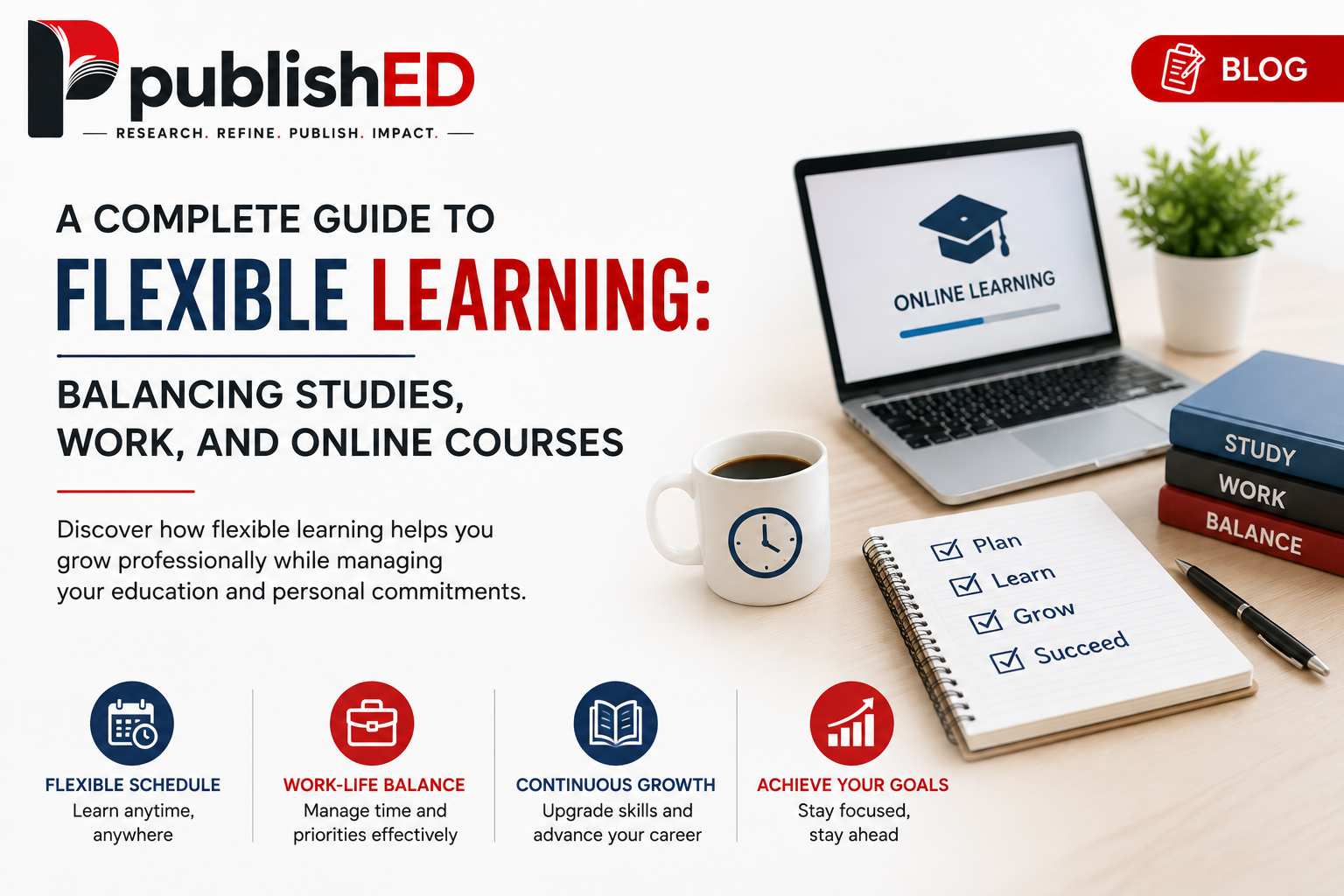
A Complete Guide to Flexible Learning: Balancing Studies, Work, and Online Courses
In today’s fast-evolving global economy, the boundary between "learning years" and "working years" has permanently dissolved. Continuous upskilling is no longer optional—it is a core requirement for career growth. Whether you are a full-time professional looking to move into a managerial role, a healthcare practitioner attending specialized clinical workshops, or a student pursuing job-oriented diploma programs, fitting structured education into a daily routine is a modern challenge.
Flexible learning—the practice of studying via online certificate and diploma platforms like PublishED on your own schedule—offers an unprecedented opportunity to upgrade your skill set without stepping away from your job. However, flexibility without structure can quickly lead to burnout, missed deadlines, or unfinished modules.
This comprehensive guide breaks down actionable time-management frameworks, study environment setups, and active learning strategies designed to help you balance work, personal life, and online education successfully.
1. Understanding the Modern Flexible Learning Model
Flexible e-learning portals offer diverse learning formats. Understanding how these formats operate allows you to choose the right delivery method for your lifestyle and energy levels.
Asynchronous Modules (Self-Paced)
Asynchronous learning gives you full control over your time. You can stream lectures late at night or during morning commutes, complete readings at your pace, and download verified certificates upon completion. While ideal for busy shift workers and full-time employees, it requires strong personal accountability.
Synchronous Sessions (Live Interactive)
Synchronous components—such as live webinars, Dentocon medical seminars, or expert-led online workshops—require presence at specific times. These sessions build community, offer real-time interaction with instructors, and help keep study habits on track.
2. Common Challenges in Online Education (And How to Fix Them)
Balancing work, personal commitments, and online study programs comes with psychological and operational roadblocks. Identifying them early helps you put solutions in place.
3. Proven Time-Management Frameworks for Students & Workers
Relying on willpower alone rarely works when juggling a 40-hour work week alongside online course loads. Implementing structural time-allocation methods ensures consistent academic progress.
A. Time-Blocking with Daily Themes
Instead of trying to find random pockets of free time, dedicate recurring blocks of your calendar to specific academic tasks.
-
Morning Anchor (30–40 Mins): Dedicate early morning hours—before your workplace opens—to high-focus tasks like reading complex lecture material or attempting quizzes.
-
Evening Review (45 Mins): Reserve post-work hours for lower-cognition tasks like reviewing lecture notes, participating in feedback forums, or organizing research files.
-
Weekend Deep Work (2 Hours): Set aside a fixed block on Saturday or Sunday mornings for main project submissions, lab reports, or major course assessments.
B. The Eisenhower Matrix for Prioritization
Categorize incoming work and academic responsibilities to prevent course deadlines from clashing with urgent workplace obligations:

4. Setting Up an Effective Physical and Digital Workspace
Where and how you study directly impacts information retention and focus speed. Optimizing both physical and digital spaces reduces mental friction.
Physical Workspace Optimization
-
Designate a Dedicated Study Zone: If possible, set up a specific desk or corner dedicated strictly to learning. Associating a specific physical location with study triggers focus automatically.
-
Optimize Ergonomics: Proper seat height, external monitor positioning, and good lighting reduce eye strain and physical fatigue during long study sessions.
-
Manage Distractions: Keep your phone in another room or set it to 'Do Not Disturb' while completing course modules.
Digital Workspace Setup
-
Separate Browser Profiles: Create a dedicated browser profile for your online portal (e.g., PublishED). Keep your study bookmarks, reading resources, and student portal logins separate from your personal or work profiles.
-
Organize Course Materials: Keep lecture slides, notes, assignments, and digital certificates categorized in organized local folders or cloud drives.
-
Single-Tab Focus: Close unnecessary browser tabs. Research shows that having work-related tabs open during study time increases anxiety and slows down learning.
5. Strategic Communication: Aligning Employers & Academics
Succeeding in e-learning often requires support from your employer, colleagues, and family.
Discussing Upskilling with Your Manager
-
Align Courses with Career Goals: Explain how the diploma or certification program directly enhances your workplace performance and brings value to the team.
-
Set Clear Expectations: Reassure your manager that study commitments will not affect core job responsibilities or project deadlines.
-
Explore Learning Benefits: Many employers offer professional development stipends, tuition support, or flexible work-from-home options to support continuous education.
Utilizing E-Learning Support Systems
-
Engage in Webinars & Workshops: Participate actively in live seminars and academic events to build professional networks with peers and instructors.
-
Leverage Student Support: If you face issues downloading verified course certificates or navigating your student dashboard, reach out early to student helpline support rather than delaying progress.
6. Energy Management & Burnout Prevention
Managing energy is far more important than managing time. Attempting to study complex academic modules when mentally exhausted leads to low retention and frustration.
Strategies to Maintain Long-Term Momentum
-
The 15-Minute Rule for Low Motivation When feeling too tired to study, commit to reviewing materials for just 15 minutes. Breaking the friction of starting is often enough to keep going. If fatigue persists after 15 minutes, rest without guilt.
-
Prioritize Active Recovery High-intensity work and study schedules must be balanced with true rest. Engage in non-screen activities—such as walking, exercise, or spending time outdoors—to allow your brain to process new information.
-
Break Learning into Micro-Steps Divide extensive modules into smaller sub-tasks. Rather than trying to complete a full diploma module in one sitting, break it down into reading 5 pages or watching one 10-minute video daily.
SEARCH
OUR ACHIEVEMENTS










PARTNERS