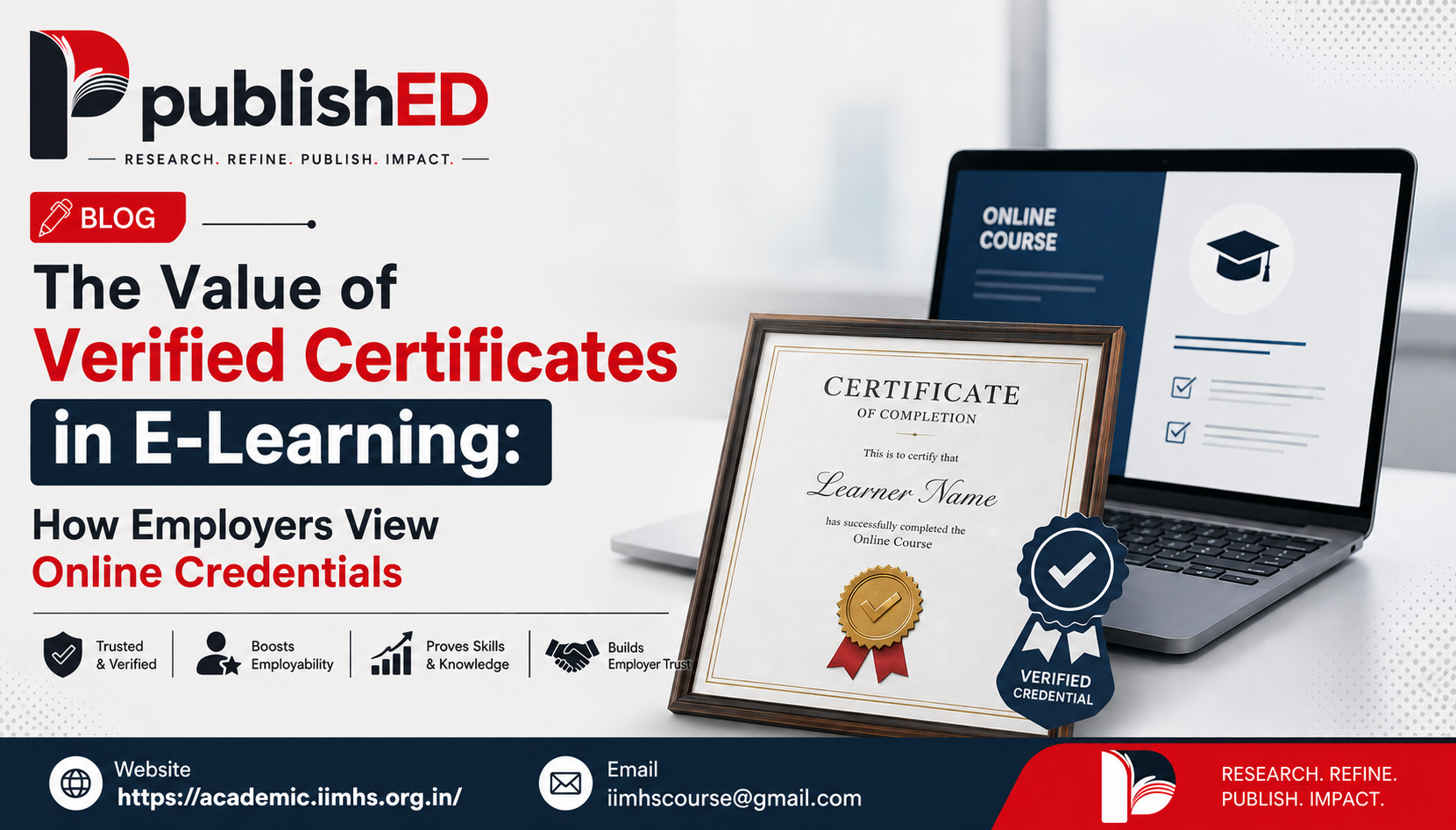
The Value of Verified Certificates in E-Learning: How Employers View Online Credentials
The modern hiring landscape has undergone a seismic shift. As skills-based hiring rapidly replaces traditional degree-only filtering, online credentials and micro-certifications have moved from the margins of HR evaluation directly into the mainstream.
However, with thousands of e-learning platforms, open courses, and diploma portals competing for attention, a fundamental question remains: How do employers distinguish between a meaningful, job-ready certification and a superficial PDF download?
The answer lies in verification, provider credibility, and practical proof of skill. This guide examines how top hiring managers and HR teams view verified online certificates, what technical elements create genuine trust, and how job seekers can leverage digital credentials to accelerate career growth.
1. The Shift: How Employer Sentiment Has Evolved
A decade ago, distance learning and online certificates were often met with healthy skepticism. Employers worried about course rigor, candidate identity verification, and "diploma mills" that issued certificates without rigorous assessment.
Today, employer perception has transformed due to three major drivers:
-
The Rise of Skills-Based Hiring: Organizations increasingly evaluate candidates on what they can build or execute rather than solely where they went to school.
-
Tamper-Proof Verification Technologies: Modern e-learning systems embed cryptographic signatures, unique verification URLs, and direct database lookup tools that eliminate resume inflation.
-
Proof of Self-Motivation: Completing a rigorous online certificate alongside full-time work or study signals high discipline, time management, and a growth mindset—traits that hiring managers actively seek.
2. Unpacking Credential Verification: What Employers Actually Check
Not all certificates carry equal weight in a recruitment pipeline. When HR teams, technical leads, or background check providers evaluate an applicant's e-learning credentials, they look for specific structural and technological verification signals.
Anatomy of a High-Value Verified Certificate

How Modern HR Teams Verify Digital Certificates
-
Direct URL / QR Code Inspection: A recruiter clicks the verification link or scans the QR code directly from the candidate’s resume or LinkedIn profile.
-
Database Lookup: The link routes to an official issuer record displaying the recipient’s full name, completion date, and credential ID.
-
Curriculum & Provider Assessment: Employers check whether the issuing body or platform maintains industry alignment, recognized accreditation, or specialized domain authority (such as medical, technical, or business education).
3. How Different Industries Value Online Credentials
Employer perception varies depending on the technical depth, regulatory requirements, and practical application required by the industry.

A. Information Technology, Web Development & UI/UX Design
-
Employer Stance: Extremely High Value.
-
Why: Tech hiring relies heavily on practical proof. A candidate holding a verified certificate in frontend development or UI design backed by a portfolio of working code/designs is frequently preferred over a candidate with a purely theoretical background.
B. Business, Marketing & Project Management
-
Employer Stance: High Value for Career Advancement & Transition.
-
Why: Certifications in specialized domains (e.g., SEO, digital analytics, agile project management) demonstrate that an employee is up-to-date with current industry tools and methodologies.
C. Healthcare, Medicine & Allied Sciences
-
Employer Stance: High Value for Specialized Workshops & Continuing Education.
-
Why: While online certificates do not replace primary medical degrees or clinical licensure, specialized certificates from clinical conferences (such as Dentocon), webinars, and medical seminars demonstrate active participation in continuing professional development (CPD) and specialized clinical knowledge.
4. Why Verification Protects Both Learners and Employers
The rise of unaccredited "diploma mills" makes online verification critical for maintaining the value of genuine educational achievements.
For Learners:
-
Guards Your Investment: Instant, verifiable proof ensures your hours of study cannot be imitated by someone using an edited image or fake document.
-
Simplifies Global Job Applications: Verified links allow employers anywhere in the world to validate credentials instantly without waiting for physical mail or transcript dispatch.
-
Builds Instant Recruiter Confidence: A clickable credential link on a resume removes doubt and speeds up candidate screening.
5. Strategic Guide: How to Present Online Credentials for Maximum Impact
Earning a verified certificate is only half the battle; how you showcase it on your CV, LinkedIn, and during job interviews determines its true impact.
SEARCH
OUR ACHIEVEMENTS




PARTNERS